The short answer
For furniture, rugs and home decor, 3D wins. It is the only one of the two that shows the real product at its real size.
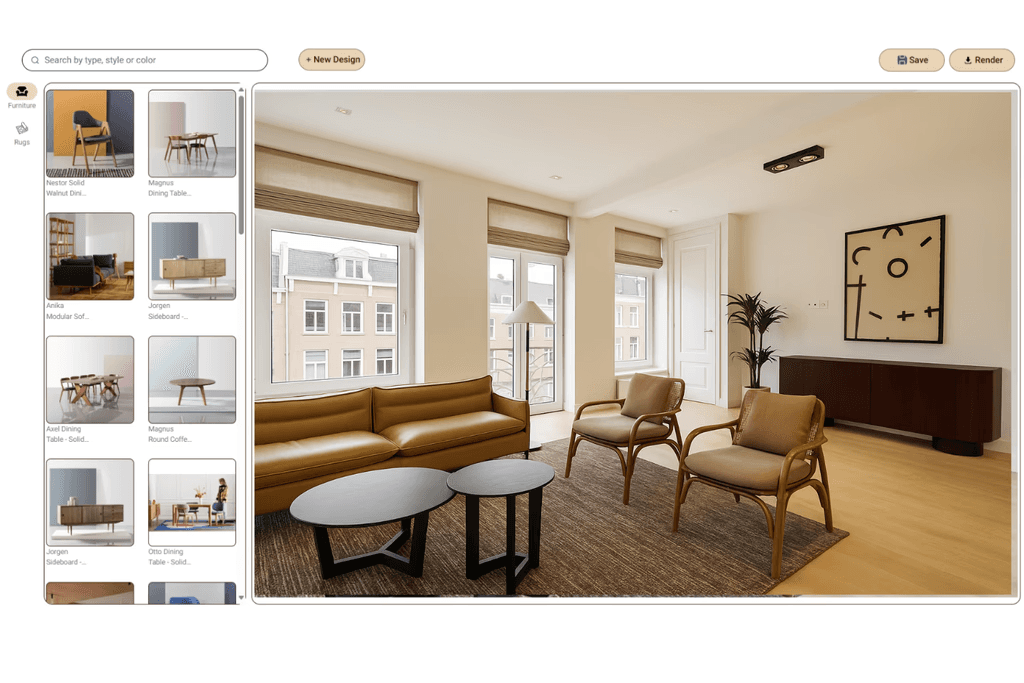
A 3D room visualizer places a model of the exact product you sell into the shopper's own room, at its real size. A generative AI room visualizer paints a new image of a room with something like your product in it. That picture can look great, but nothing in it is measured, and the image model can change the product while it draws it. When the shopper's question is "will this sofa fit, and is it the one I'm buying?", they need the real product at real scale, not a plausible picture.
Generative AI still has a place. It is quick for mood imagery and concept scenes. Imersian uses AI around the 3D core: to build the models from your product photos, to clear the shopper's room, and to render a photorealistic image of the design they made in 3D.
What is the difference between a 3D and an AI room visualizer?
Both start with a photo of the shopper's room. What happens next is different.
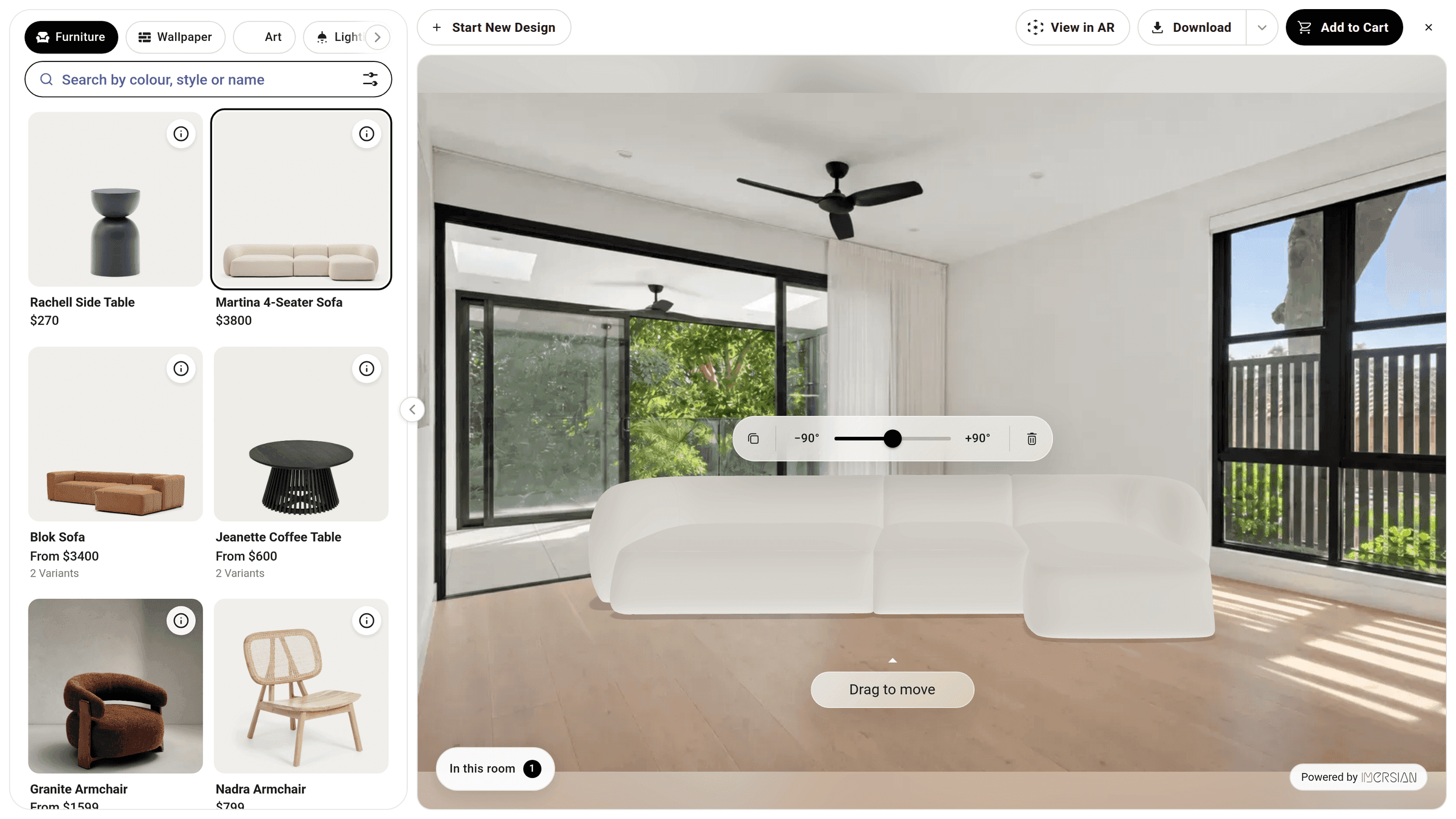
- 3D room visualizer. Every product has a 3D model built to its real dimensions, materials and colors. The visualizer reads the floor, walls and depth of the room photo (room reconstruction) and places the model in it at true scale. The shopper can move, rotate and swap products, and each product stays exactly the product.
- Generative AI room visualizer. An image model takes the room photo plus a product photo or a text prompt and generates a new picture. Every pixel is synthesized, including the product. Nothing in the process measures the room or holds the product to its spec sheet.
Put simply: 3D shows the product in the room. Generative AI shows a picture of what the room might look like with something similar in it.

Accuracy: the shopper sees the product you actually sell
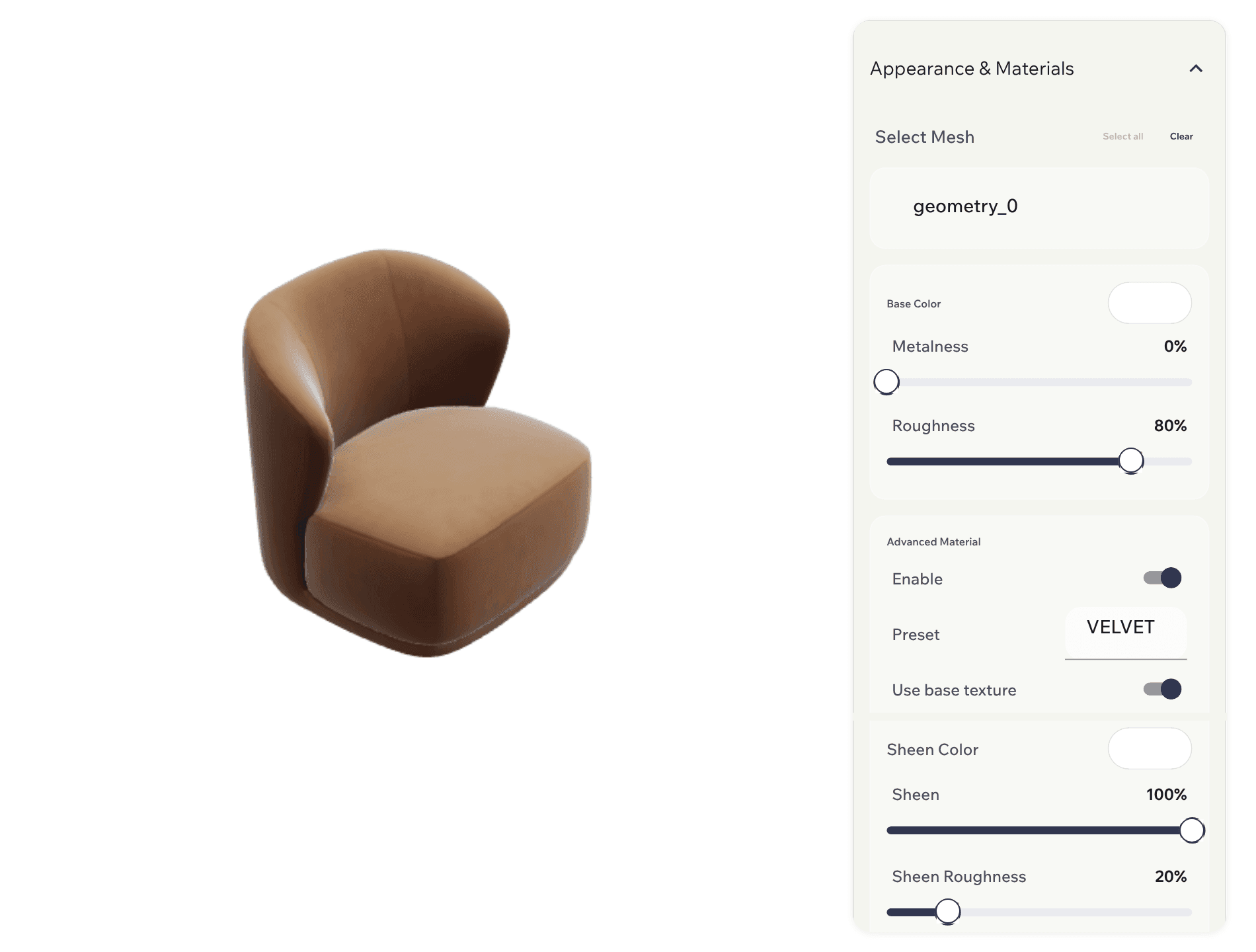
A 3D model is built from the product's own photos and dimensions, so what appears in the room is the real item: the same leg profile, the same fabric color, the same rug pattern and pile. Rotate it and the sides and back are there too, because the model has them.
This matters most where the details sell. A hand-knotted rug is bought for its pattern and colorway. A sofa is bought for its arm shape, seat depth and fabric. If the preview shows a slightly different version, the shopper is judging something you don't stock.
Fit: true-to-scale placement in the shopper's own room
The question a room visualizer really answers is "will it fit?" A 3D model has real dimensions and the room has real geometry, so a 240 cm sofa takes up 240 cm of wall, and an 8x10 rug covers the floor area an 8x10 rug covers. The rug sits under the sofa legs, not on top of them, with matching perspective and shadows. That is what Spatial AI in the Imersian Visualizer does.
A generated image has no measurements to check. The image model decides how big the product looks, based on what seems plausible in the picture. It may be close. It may also shrink a sofa to fill a gap. The shopper can't tell which, and fit is the very decision they are trying to make.
Confidence: why generated images can change the product
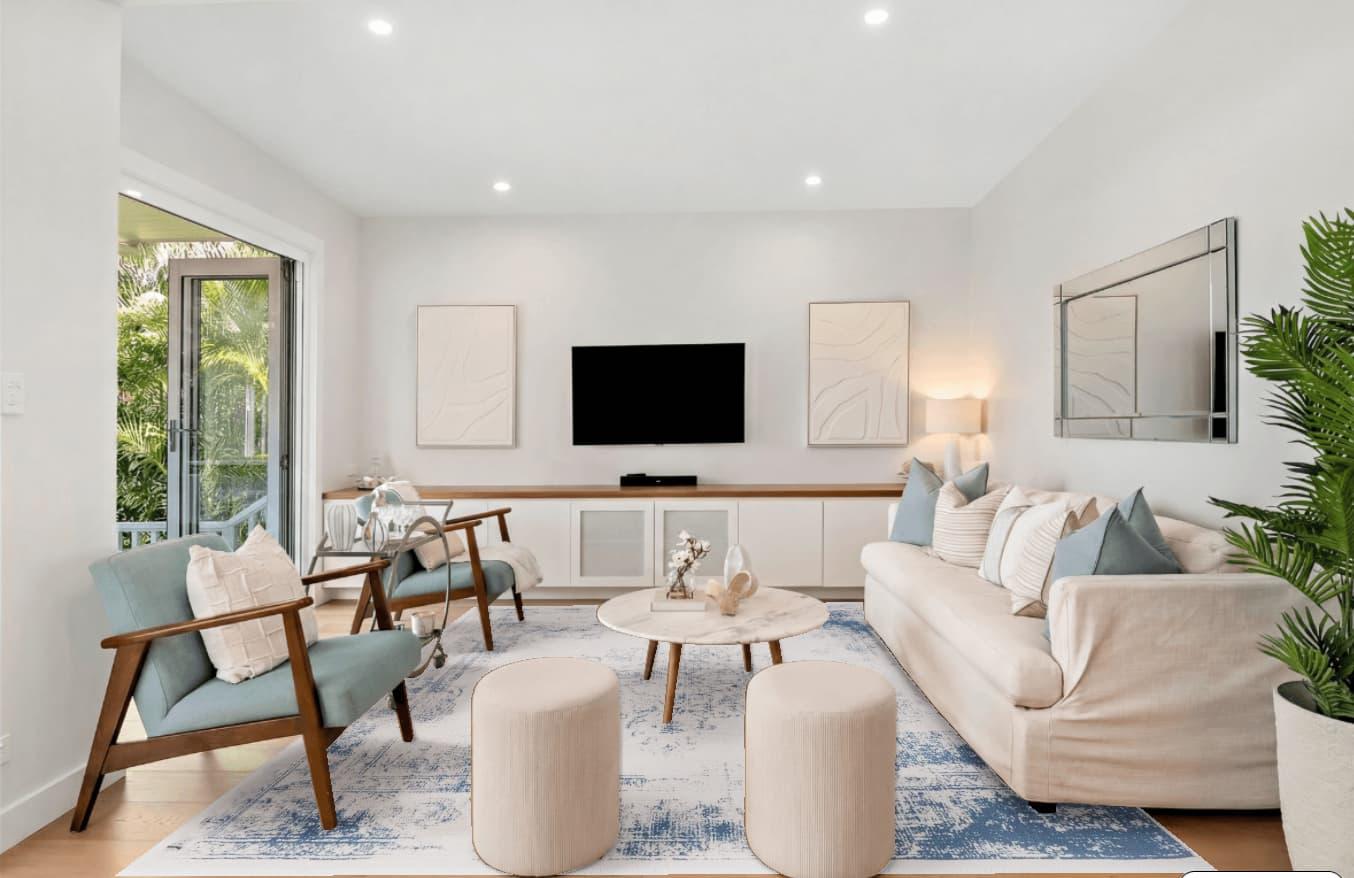
Generative image models are built to produce a convincing picture, not a faithful copy. When they redraw your product into a room, they can alter it. This is usually called hallucination. In a room visualizer it can look like this:
- Turned legs that come back tapered, or four legs that turn into a plinth.
- A rug pattern that drifts: medallions move, borders change, colors shift.
- Proportions that change: a deep sofa gets shallower, a runner gets wider.
- Details that appear from nowhere: extra cushions, piping or fringe the product doesn't have.
Each one is a small difference in a pretty picture. To the shopper, it is the difference between the product they ordered and the one that arrives, which is where returns and lost trust come from. A 3D model can't drift like this, because the product is placed rather than redrawn: the same model appears in every room, at every angle, in every session.
3D vs AI room visualizer: side-by-side comparison
| Factor | 3D room visualizer | Generative AI room visualizer |
|---|---|---|
| Accuracy | The real product: true dimensions, materials, color, pattern and pile | A generated likeness; details can differ from the product |
| Scale and fit | True to scale in the shopper's room, so they can see whether it fits | Size is estimated by the image model, not measured |
| Product fidelity | The same model in every room and from every angle | Redrawn for each image, so it can vary |
| Hallucination risk | None for the product: it is placed, not redrawn | Can invent or alter legs, patterns, proportions and details |
| Interaction | Move, rotate, swap and combine products live | Usually a new image for each change |
| AR support | The same model opens in AR on a phone | A flat image; no AR |
| Setup effort | A 3D model per product; Imersian builds them from your photos | Usually product photos only; quick to start |
| Cost | Model creation plus a subscription; with Imersian, rug models are free | Per-image generation or a subscription; low entry cost |
| Best for | Purchase decisions: fit, size and the exact product | Inspiration, mood imagery and concept scenes |
Where generative AI is genuinely useful
Generative AI is good at work that doesn't need to be exact. Fair uses include:
- Mood and inspiration imagery for campaigns, social posts and category pages.
- Quick concept scenes to test a style direction before a photoshoot.
- Lifestyle images around a product, where nobody is making a fit decision from that image.
The risk starts when a generated image is the thing a shopper uses to decide what to buy. At that point, accuracy matters more than speed.
How Imersian uses AI around a 3D core
Imersian keeps the product exact and lets AI do the scene work. The Imersian Visualizer places true 3D models, and AI handles the jobs around them:
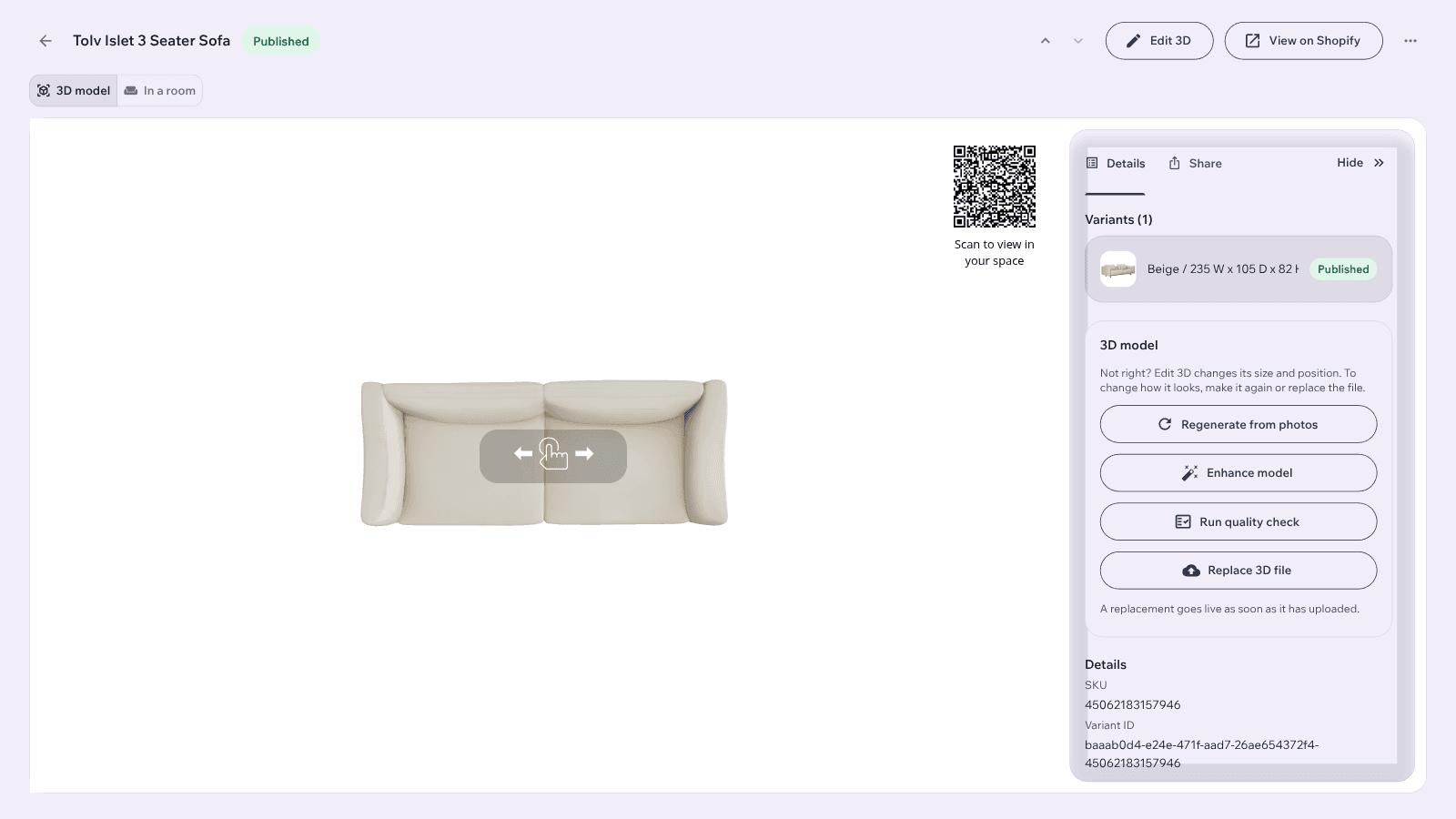
- AI 3D Creator builds the 3D models from your existing product photos, so you don't need CAD files or a 3D team.
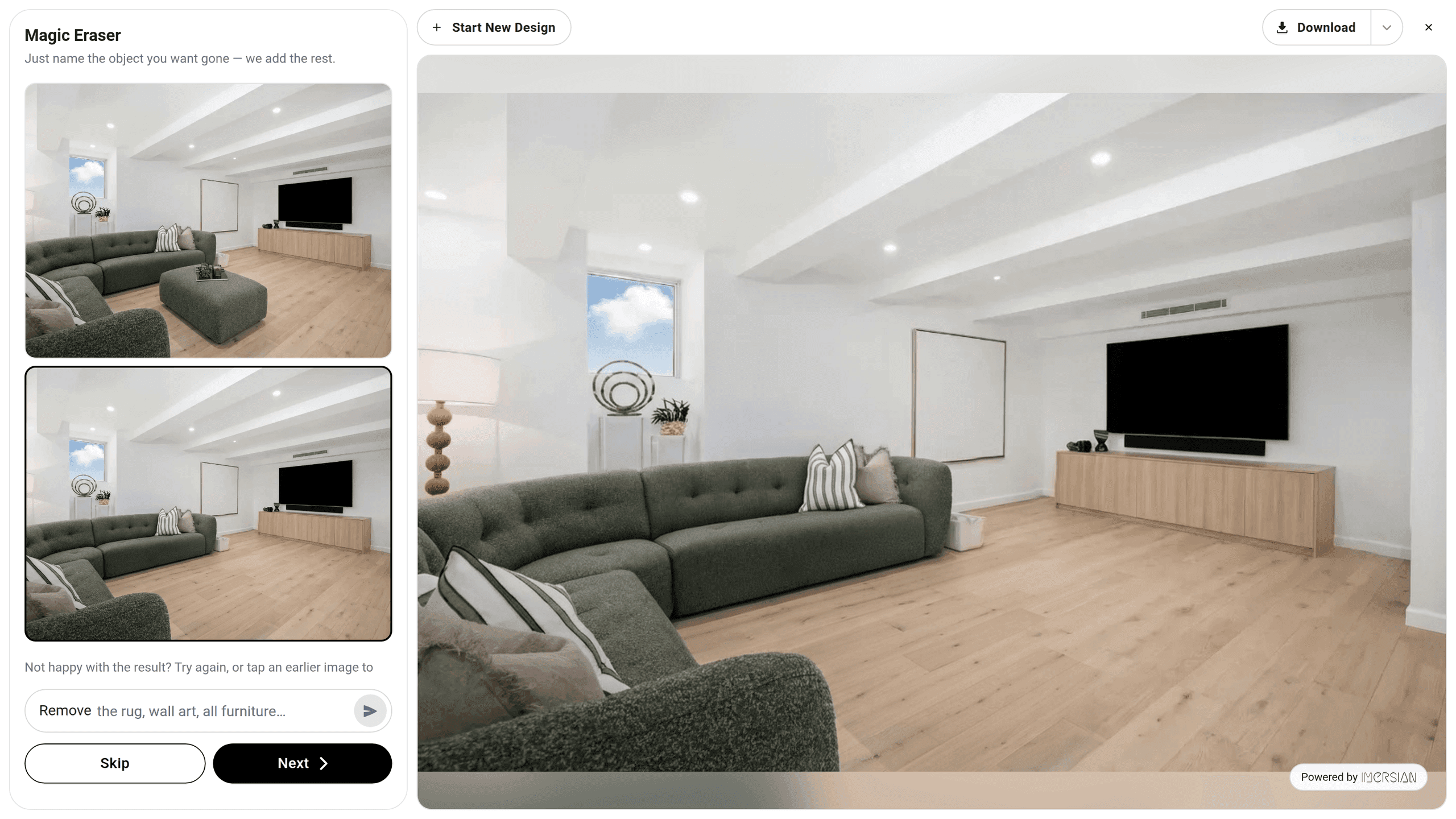
- Magic Eraser clears existing furniture out of the shopper's room photo, so they can see the new sofa where the old one stands.
- HD Render turns the room the shopper designed in 3D into a photorealistic image in about 15 seconds, where the retailer has it switched on. It starts from their actual design at true scale, not from a prompt.
- Augmented reality opens the same 3D models on a phone, in the room itself.
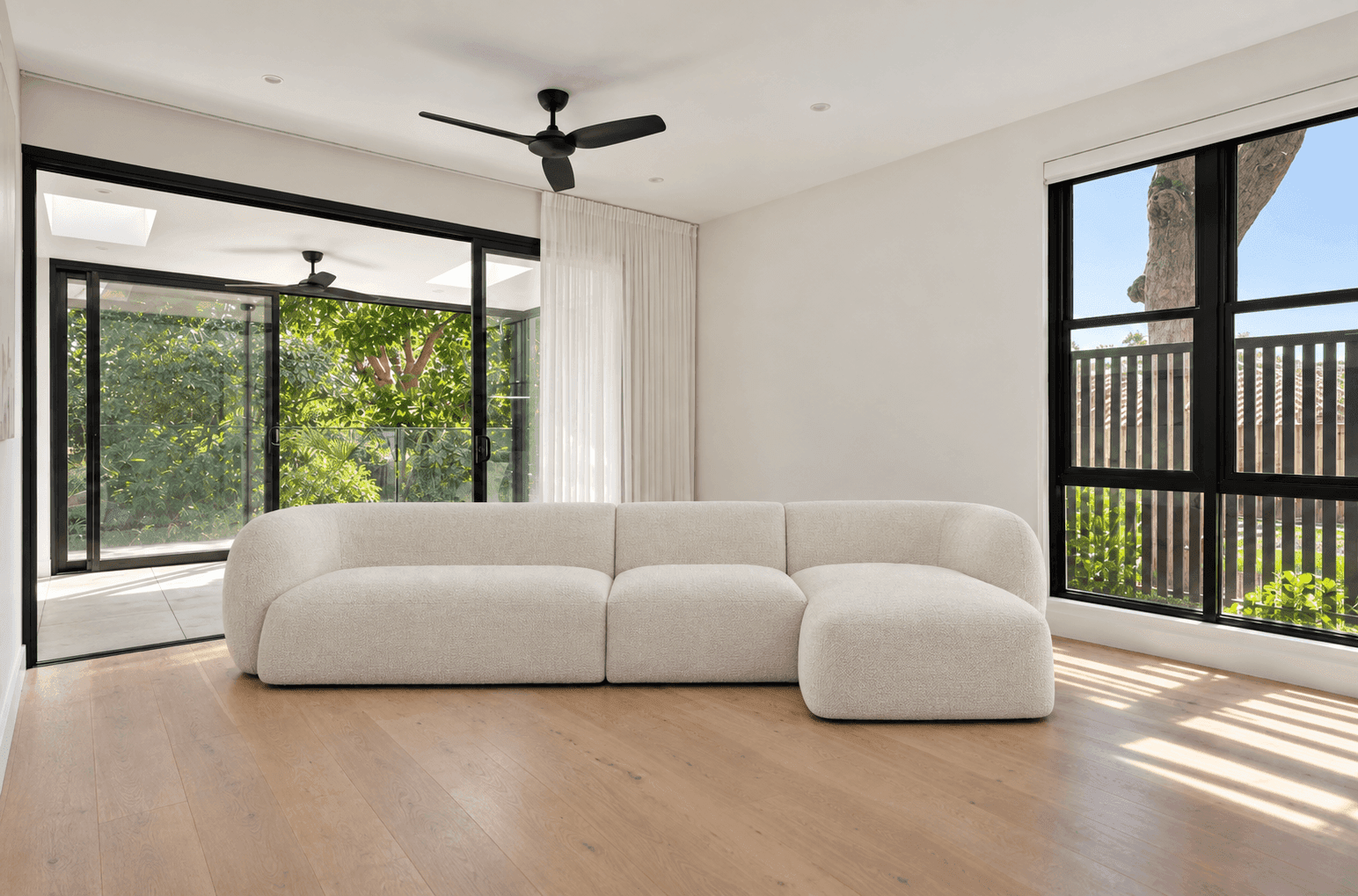
The choices that matter (which product, what size, where it goes) are made in 3D. AI makes the scene around them look good.
Isn't 3D slow and expensive to set up?
It used to be. Per-SKU 3D modeling meant CAD files, agency quotes and weeks per batch. Now retailers send Imersian the product photos and dimensions they already have, Imersian builds the models, rug models are free, and retailers go live within two weeks. We explain how in Is 3D product modeling slow and expensive? Not any more.
See how it works for rug retailers and furniture retailers.
How to tell which kind of visualizer you are looking at
- Place a product you know the size of next to something in the room of known size. A standard interior door is roughly 80 to 90 cm wide.
- Rotate the product. A 3D model turns in place; a generated image has to be generated again.
- Generate the same scene twice. If the product looks different between the two, it is being redrawn.
- Zoom in on the details that sell, such as the pattern, legs and fabric, and compare them with the product page.
- Ask the vendor directly whether products are placed as 3D models or generated as images.