
-1.jpg?width=2000&height=1414&name=Imersian%20-%20See%20It%20In%20Your%20Room%20Interior%20Visualiser%20(2)-1.jpg)
Educational


For years, creating high-quality 3D models has been one of the quiet bottlenecks of e-commerce. The process is expensive, manual, and slow - especially in furniture and décor, where detail, proportion, and materiality matter.
When generative AI entered the scene, it promised a breakthrough - faster models, lower costs & instant scalability. But for most brands that promise hasn’t held up.
AI-generated 3D models may look impressive at first glance, but once they’re dropped into a real commercial pipeline, the cracks start to show. Thumbnails don’t translate to transactions. And “good enough” visuals don’t survive production requirements.
Here’s why most generative 3D models aren’t e-commerce ready, and how Imersian is closing the gap.
In furniture, scale isn’t a nice to have - it’s the product.
A chair that’s a few centimetres off, or a sofa that feels slightly too deep, can instantly break trust. Most AI-generated models are built on visual approximation alone. They don’t understand real-world dimensions, ergonomic standards, or manufacturing constraints.
So while a model might look right on screen, it often doesn’t line up with the spec sheet.
For e-commerce, that gap matters.
Under the surface, many AI-generated meshes are unusable.
Non-manifold geometry, overlapping faces, broken edge flow - or what artists call “spaghetti geometry.” These issues make basic downstream tasks like UV unwrapping, lighting, animation, or physics simulation frustrating at best and impossible at worst.
If a model can’t move through your pipeline cleanly, it’s not production ready.
Materials are where AI often loses the plot.
Fabric appears too smooth, timber looks metallic, matte finishes shine like chrome and so on! Without an understanding of physical material behaviour, AI defaults to overly polished and synthetic results.
In a category where customers buy based on texture, warmth, and finish, that fake look quietly erodes confidence.
Raw AI models are heavy. Unoptimised. Over-textured.
Excessive poly counts and unnecessary 4K textures slow load times, strain AR viewers, and introduce glitches across devices. What works in a render doesn’t always work in real-time environments.
For web and AR, performance is part of the experience.

At Imersian, we learned early that generating a 3D model is only half the job. The real challenge is making it usable - accurate, performant, and ready for commerce.
This is exactly why we built a pipeline designed around production reality, not just visual novelty.
Our Image-to-3D engine doesn’t rely on visuals alone. We incorporate real product metadata (actual width, height, and depth) directly into the generation process.
The result is a model that aligns with the product spec sheet, not just the photo.
We focus heavily on material accuracy. Our pipeline estimates physically based rendering (PBR) maps (roughness, metallicity, and texture) so materials behave as they should.
Wood has the grain of wood. Velvet absorbs light. Finishes feel intentional, not synthetic.
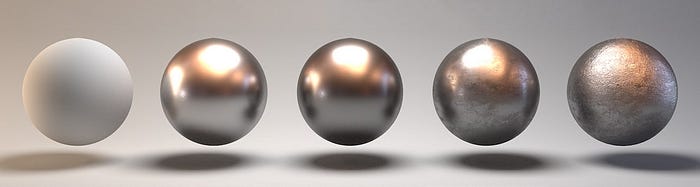
Every asset is automatically optimised for real-time use:
· Clean topology, efficient poly counts, and right sized 1K or 2K textures.
· We deliver in formats built for instant web loading and seamless AR experiences with no manual cleanup required.
Generative AI has massive potential for 3D, but without precision, material intelligence, and performance optimisation, it falls short of what e-commerce actually needs.
At Imersian, we’re not chasing novelty, we’re building infrastructure. Automation that respects design, engineering, and user experience equally.
Because in commerce, looking good isn’t enough.
It has to work.